A lot of advice about bakery brand authority starts with the same instruction: put your face in front of the camera, a phone propped against the flour bin. For plenty of bakery owners, that’s where the conversation ends. They’d rather be at the oven.
A face is a shortcut. In a second, it can tell a stranger that a person is accountable for what they’re looking at. Take it away and the same job has to be done by things the stranger can check.
Credibility is shaped by perceived trustworthiness and expertise, and a stranger often judges both through what they can check. Authority grows on top of that. Below are five cues a bakery can use to lay that base without anyone appearing on camera, each one a place where credibility is either built or quietly lost.
Table of contents
- Start with sixty seconds as a stranger
- Details a stranger can check
- Proof from other people
- A real place, on the record
- Signs that someone is still there
- People without faces
- What authority looks like from the outside
Start with sixty seconds as a stranger
Try this before reading on. Open your Instagram profile, your Google listing, and your website as if you’d never heard of the bakery:
- What can you verify in a minute without messaging anyone: what the bakery makes, where it is, when it’s open, what other people say?
- What would you have to take on faith?
- Who, if anyone, seems to be behind it?
Whatever you’d have to take on faith is where a face would have been doing the work.
1. Details a stranger can check
A bio says handmade, small batch, made with love. A caption says the bread is fresh daily. Any bakery nearby could sign them, and none of them gives a stranger anything to check.
Easy-to-verify information is a credibility cue in itself, and a specific detail can work the same way: how long the dough ferments, which mill the flour comes from, what time the first oven goes on.
Each one can be examined, questioned, or confirmed in its own way. Naming the mill is a start. Saying why that flour was chosen and what it does for the loaf shows the knowledge behind the choice, and that’s where expertise becomes visible.
Without checkable details, authority has to be taken on faith, which a stranger has little reason to extend to a business they’ve just discovered. We use a similar test for a bakery’s story: whether a stranger learns something that wouldn’t be true of any other artisan bakery. Which detail in your bio could someone confirm by walking in?
2. Proof from other people
A bakery has an interest in describing itself favorably, so its own account can’t replace independent evidence. What other people say is the closest thing to an outside check that works without a face, and it covers something the bakery can’t: what it’s like to buy from it.
Across local businesses, 47% of consumers say they won’t use one with fewer than 20 reviews, and 68% say they’ll only use one rated four stars or higher. A single review can be a one-off, and a stranger knows it, which is why the count and the spread across sites matter.
Proof also has to be where someone new to the bakery looks. The average consumer now checks six different review sites when choosing a business, so proof that lives in one place is easy to miss.
How many reviews does your bakery have, and where can a stranger find them?
3. A real place, on the record
A business reads as more credible when it shows a real organization behind it and makes contact information clear: a physical address, a phone number, an email. The trouble starts when the record disagrees with the door a customer actually finds.
A listing with one set of hours, a bio with another, a website with a third: each one is a small contradiction, and small errors hurt credibility more than people imagine. A listing with hours that don’t match the door is one version of it.
The stranger is left to decide which version to believe, and a business with several versions of itself can seem unsure of what it is. Do the listing, the bio, and the website say the same thing this week?
4. Signs that someone is still there
A listing can be correct and still look abandoned. A stranger can’t walk past to see whether the lights are on, so online activity is the lights. New photos, updated holiday hours, and a reply to a question from last week all show that someone is paying attention. Recent reviews matter too: 74% of consumers say they look for reviews written within the last three months.
These signals show that someone is paying attention, which says little about what the bakery knows. Before judging that, a stranger needs to know the bakery is still there.
5. People without faces
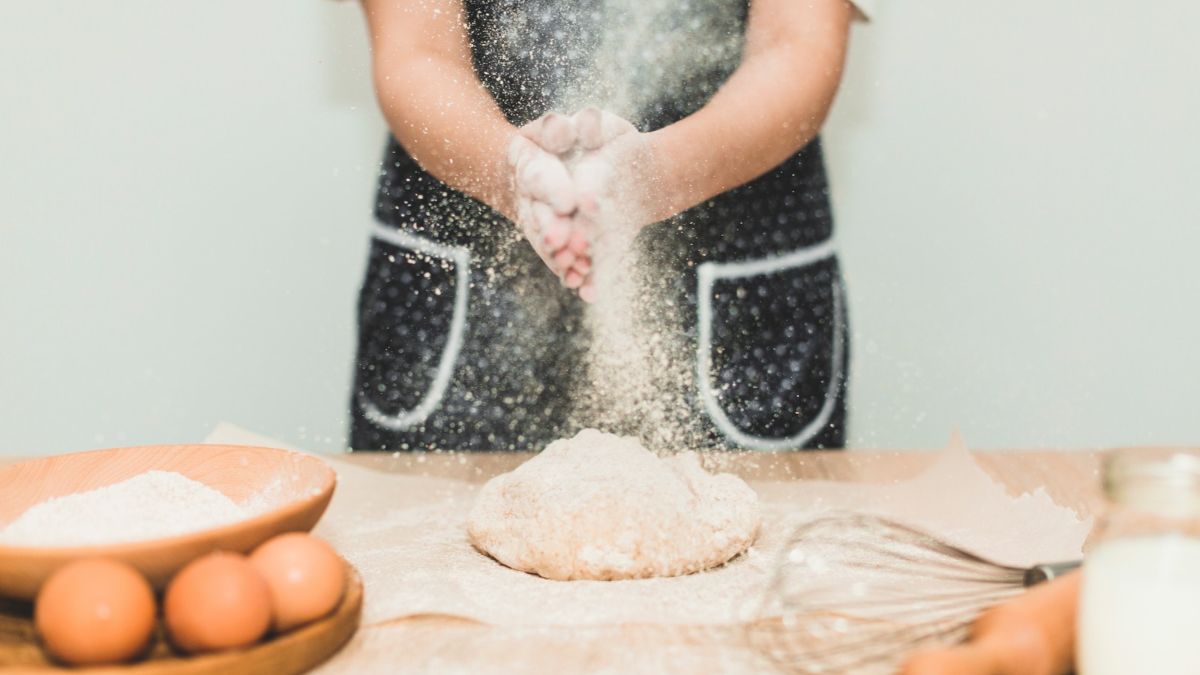
The face is the strongest way to show that honest and trustworthy people stand behind a business. It also signals accountability. Hands shaping dough and a real voice in the replies deliver part of that message too.
Accountability shows up when something needs explaining: answering a specific question about a product, explaining why an item was taken off the menu, owning a mistake and saying how it was fixed. A reply signed with a first name shows who’s behind the bakery without a single frame of video.
When a brand shows no sign of the people behind it, no names, no hands, no human voice in the comments, it can start to feel like a template. And it’s difficult to hold a template accountable. Who answers when a stranger asks a question, and can the stranger tell?
What authority looks like from the outside
A bakery has a real address, a real product, real customers, and other people’s words about all three. Authority means showing knowledge, consistency, and accountability in ways a stranger can recognize, and whether a stranger can find that evidence is a communication question.
If you’d rather be at the oven than on camera, that preference doesn’t have to cost you authority, because the work itself can provide the evidence.
Of the five cues, which could someone new to your bakery confirm today?
At Strategy for Bakeries, we help independent bakeries communicate what makes their products worth choosing across social media, local listings, and their websites, with or without anyone on camera.
If you’d like to talk about how your bakery shows up online, send us an email.