
Instagram mistakes for bakeries rarely start with the photography. A bakery with a wood-fired oven, a talented pastry team, and a loyal morning crowd can still look amateur online, and the croissants have nothing to do with it. Nobody decided what the account is supposed to communicate before hitting post.
These five patterns show up again and again in bakery Instagram accounts. They look unrelated on the surface: inconsistent visuals, product photos with no context, sporadic posting, captions that don’t convert, content with no local reach. All five trace back to an account reacting to whatever’s on hand that day instead of operating with intention.
Before going through the list, open the last nine posts on your bakery’s Instagram side by side.
- What would a total stranger guess this bakery is about, based only on what’s on screen?
- Would the answer still hold looking at nine posts from three months ago?
If the answers don’t match, the account doesn’t need a new post next. It needs someone to decide what it’s for in the first place.
Table of contents
- The feed that changes personality with every post
- The catalog that never becomes a place
- The account that disappears exactly when it should show up
- Captions that describe, but never give meaning
- Findable in the feed, invisible in the neighborhood
1. The feed that changes personality with every post
Open the grid and the tone shifts every three or four posts. Warm morning light next to a flash-lit close-up. A rustic wooden table followed by a stark white counter. None of the individual photos are bad. Together, they read like four different bakeries sharing one account.
Here’s why it matters: every shift in tone forces the viewer to reorient instead of settling into the recognizable pattern that builds trust through repeated exposure. Familiarity never gets the chance to build, making it harder for a stranger to form a clear impression of the bakery.
A feed that changes personality with every post signals that nobody has decided yet what the bakery wants people to feel the moment they land on the page.
2. The catalog that never becomes a place
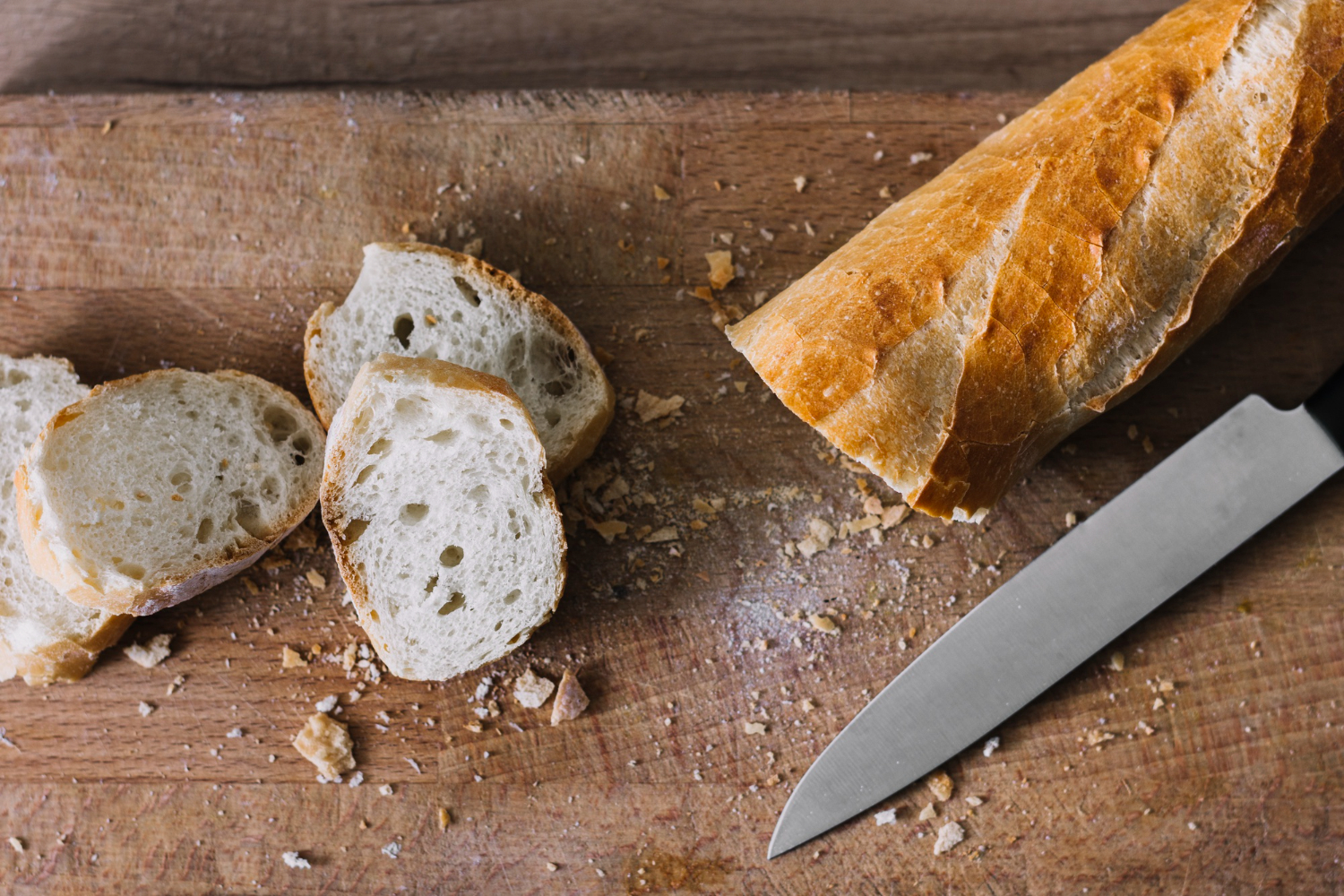
Scroll through and it’s croissant, loaf, croissant, cake, croissant. Beautiful, isolated, floating on a plain surface. What’s missing is everything around the product: the hands that shaped it, the corner table where it gets eaten, the person who picked it up this morning.
A feed built entirely from product shots functions like a catalog. It tells a visitor what’s for sale, never what it’s like to walk in. The product alone rarely seals the decision. What pulls someone in is a glimpse of the experience they might have there, and a catalog leaves very little room to picture that.
Walking through the door has less to do with the best-lit croissant than with whether the Instagram already feels like somewhere, not something on a shelf.
3. The account that disappears exactly when it should show up
Three posts in four days, then two weeks of silence. Comments sitting unanswered for a week. A direct message that never gets a reply.
Irregularity like this often has less to do with discipline than with a simpler fact: social media isn’t anyone’s actual job. It gets squeezed into whatever time is left after the ovens are off, which means it shows up when the schedule allows, not when the audience is paying attention.
The cost isn’t just fewer likes. A bakery that goes quiet for two weeks and then posts three times in one afternoon can start to feel inactive or inconsistent, and consistency is part of what a local customer is quietly weighing before deciding where their weekly order comes from.
4. Captions that describe, but never give meaning
“Fresh croissants today.” “Now available: sourdough loaves.” The caption states what exists. It never gives the reader a reason to care.
The instinct to fix this is usually to add a call to action: come visit us, stop by today. The real failure sits somewhere else. The caption never gave the product a meaning beyond itself.
Describing a croissant is not the same as explaining why this particular croissant, from this particular oven, on this particular morning, matters. The first is information. The second is context, and context is what makes a stranger stop scrolling.
Most bakeries write captions the way they’d write a menu. Menus inform people who already decided to buy. Captions have to give someone a reason to decide.
5. Findable in the feed, invisible in the neighborhood
The content is solid. Engagement is fine. And still, new customers walking in because of Instagram are rare. This is the pattern that’s easiest to miss, because everything upstream looks like it’s working.
Presence and visibility are not the same thing. A bakery can post consistently, get likes, and still be functionally invisible to the person three blocks away who’s deciding where to get coffee this morning. An account competing for attention without competing for proximity is usually missing the basics: location tagging on posts, local hashtag presence, and a link to its Google Business Profile.
Good content proves a bakery is worth following. Local discoverability proves it’s nearby. A feed can nail the first and still lose customers on the second by default.
What these five patterns have in common
You invested in this bakery because it means something to you. The ovens, the recipes, the hours before sunrise, none of that happened by accident, and it shows the moment someone walks through the door.
Instagram is often the only place a bakery like yours gets judged before anyone has the chance to taste anything. For most strangers, it’s the first version of the business they ever meet.
The five patterns above point to the same gap: a real, well-run bakery represented online by an account nobody is actively directing.
Closing that gap takes more than fixing one post at a time. It takes someone deciding, deliberately, what that first version of the bakery should say and staying accountable to that decision week after week. That’s a different kind of work than baking, and it’s reasonable that it isn’t the part of the business you signed up to master.
Strategy for Bakeries helps independent bakeries turn Instagram from a scattered habit into a deliberate part of the business. If you’d like to understand what that looks like for your bakery, send us an email.