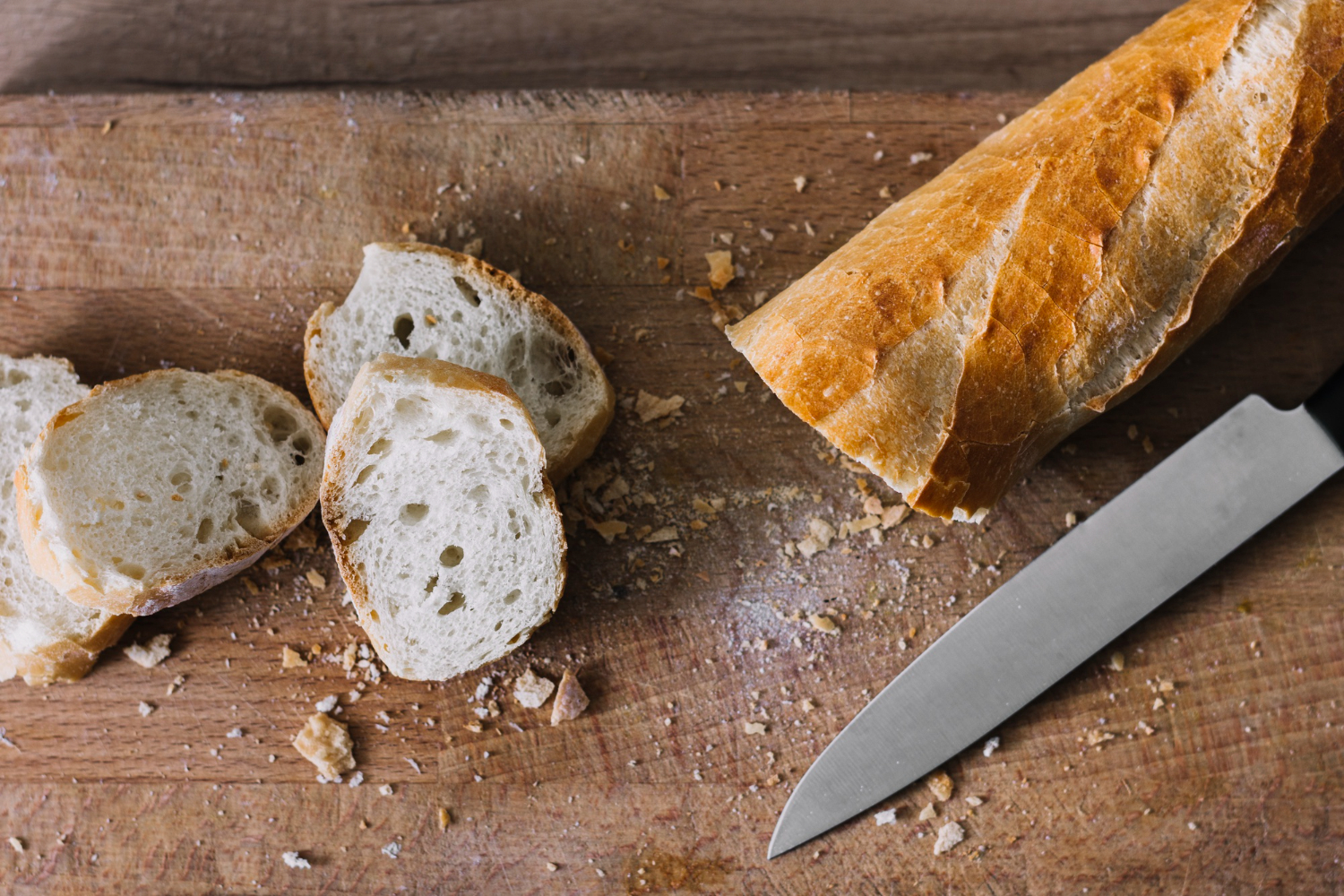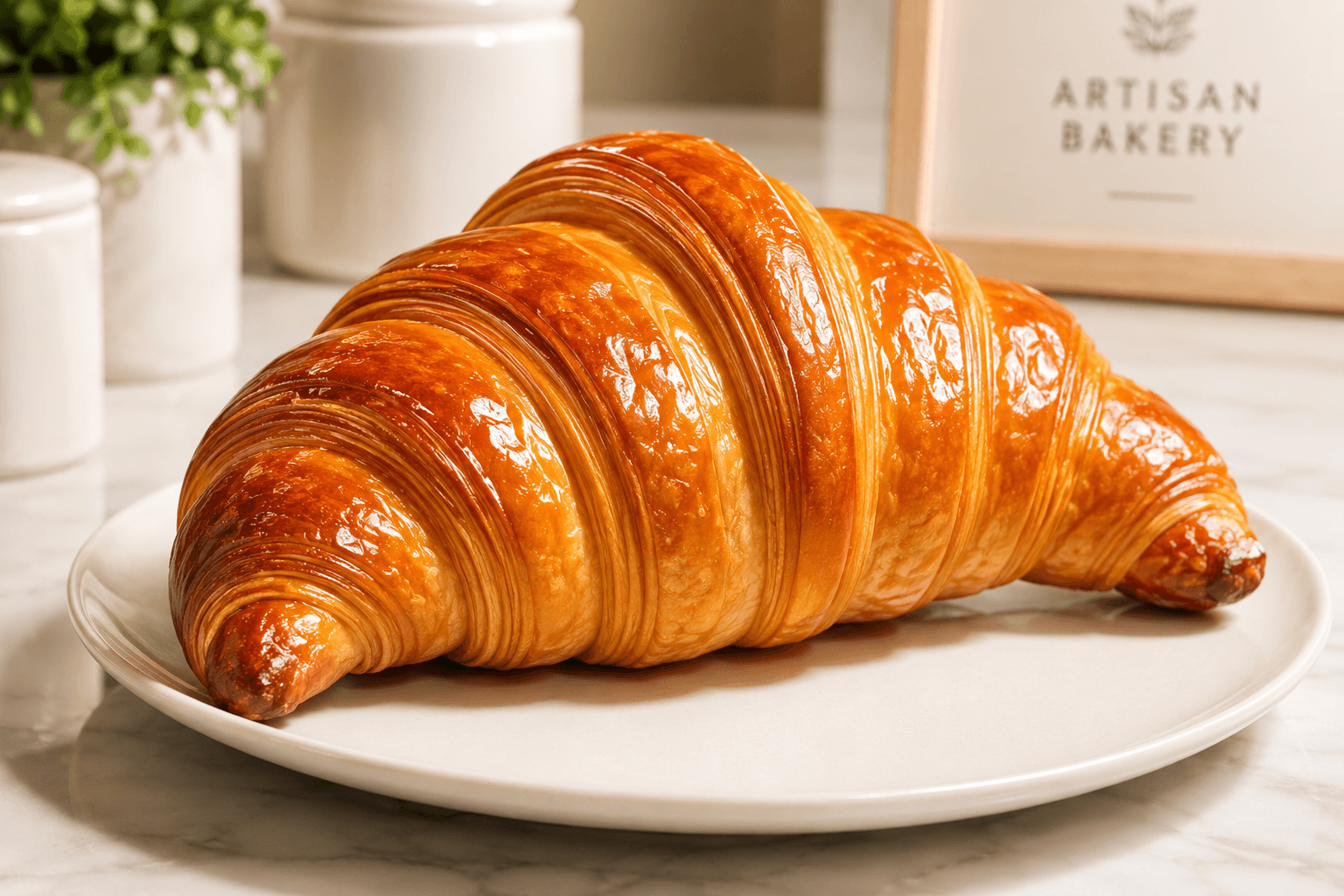
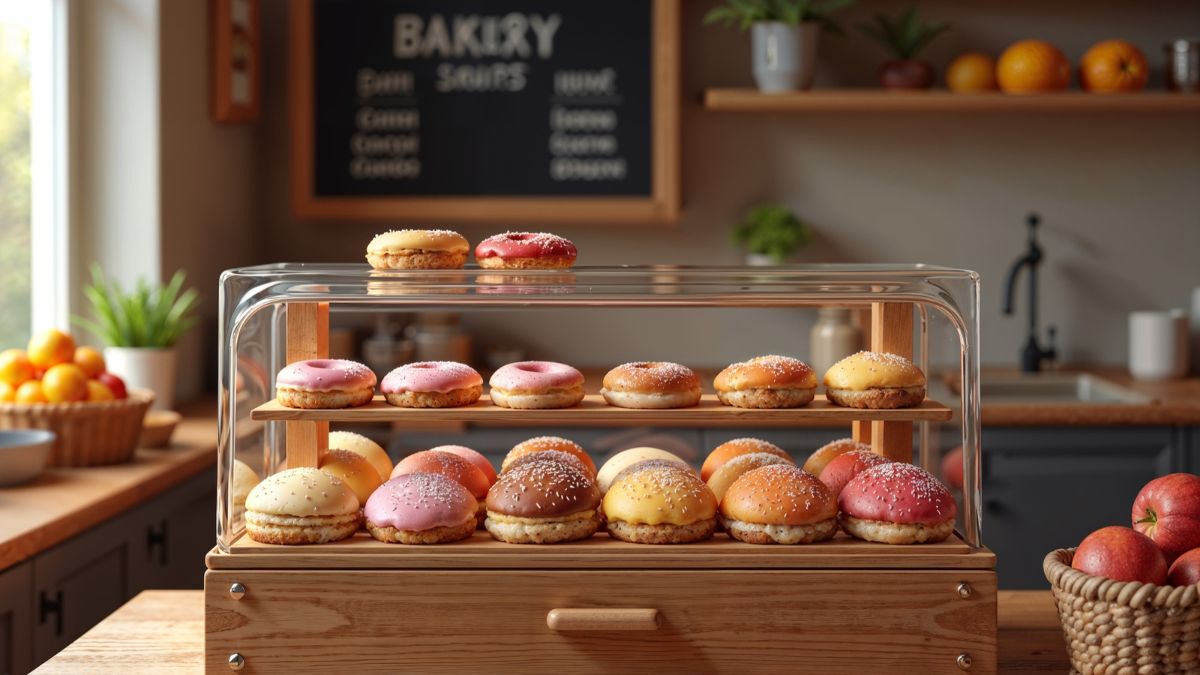
AI images for bakeries are everywhere. Scroll through social media and you’ll see perfect golden crusts, immaculate crumb structure, and lighting so pristine it could grace a magazine cover.
But here’s the uncomfortable truth: much of what you’re seeing was never baked. It was never touched by human hands. It never even existed. It’s artificial intelligence creating an illusion of authenticity—and it’s quietly eroding the very foundation that makes local bakeries special.
The artisan bakery movement was built on rebellion against industrialization. It represents a return to the real, the handmade, the imperfect. Customers choose your neighborhood bakery precisely because they’re tired of corporate polish and mass-produced perfection. They want to see flour on the counter, the slight irregularity of hand-shaped loaves, the human story behind every sourdough starter.
When you replace that reality with AI images for bakeries that smooth away every imperfection, you’re not elevating your brand. You’re betraying the very promise that brings customers through your door.
You’re perfuming the vitrine with the smell of fresh bread while baking nothing real inside.
Why imperfection builds more trust than AI perfection
Walk into any beloved local bakery and you’ll notice something immediately: nothing is perfect. The croissants have slightly different shapes. The bread has natural cracks and blisters where steam escaped during baking. There’s flour dust on dark surfaces, a coffee ring on the counter, perhaps a thumbprint on the chalkboard menu.
These aren’t flaws—they’re proof of life.
They’re evidence that real people are making real food in real time. Psychologists call these “honest signals”—the small imperfections that our brains have evolved to recognize as markers of authenticity.
The uncanny valley of AI-generated food
AI images for bakeries, no matter how sophisticated, cannot replicate this texture of truth. Even when they look impressive at first glance, something feels subtly wrong. The lighting is too uniform, lacking the organic variation of natural light moving through a space throughout the day.
The steam rising from fresh bread follows physics that are almost right but not quite human. The crumb structure looks studied rather than lived. Customers might not be able to articulate what bothers them, but their subconscious registers the disconnect. Something feels plastic, sterile, lifeless.
When doubt spreads like yeast
This matters more than aesthetics. When customers sense that your visual communication is artificial, they begin questioning everything else. If the images aren’t real, what about your claims of fresh ingredients? Your family recipes? Your artisan methods?
The doubt spreads like yeast through dough—subtle but transformative. You’ve spent years building trust through consistent quality and genuine relationships. A feed full of synthetic images can undermine that foundation without you even realizing the damage.
What actually works on social media
The most successful bakery accounts on social media aren’t the ones with perfect lighting and impossible compositions. They’re the ones showing real moments: the baker’s hands shaping dough at 4 AM, the irregular beauty of naturally leavened bread, the imperfect charm of a customer’s smile as they bite into a still-warm pastry.
These images carry weight because they document reality. And reality—with all its beautiful messiness—is what customers are actually craving when they choose local over corporate.
How AI images erase your unique identity
Every bakery has a personality shaped by its history, its community, its people, and its choices.
Maybe you’re known for rustic country loaves that look like they emerged from a century-old hearth. Perhaps your strength is delicate French pastries that showcase technical precision. Or maybe your identity centers on innovative flavor combinations that surprise and delight.
This visual identity—the way your products actually look in your specific space, captured by your particular angle of morning light—is irreplaceable. It’s your visual signature, as distinctive as a handwritten note.
The template effect
When you populate your social media feed with AI images for bakeries, you don’t just lose authenticity—you lose yourself. These synthetic images come from algorithms trained on millions of generic “bakery aesthetics.” They produce what the machine learned to recognize as “good bakery photography.”
Which inevitably means they reproduce the average, the expected, the already-seen.
Your feed starts looking like every other bakery’s feed. A homogenized digital storefront that could be anywhere, representing nothing in particular.
The death of differentiation
This is catastrophic for local businesses whose entire competitive advantage rests on being distinctive, rooted in place, connected to community. When a customer scrolls past your AI-generated croissant that looks identical to a thousand other AI croissants, you’ve become invisible.
You’ve traded your unique visual voice for a generic template. And in doing so, you’ve abandoned the strongest tool in your marketing arsenal: your genuine difference from everyone else.
The painful irony
Artisan bakeries exist because people reject industrialization and homogenization.
They choose local specifically to escape the sameness of chain stores and mass production. Yet by using AI images for bakeries to create a falsely perfect aesthetic, you’re recreating exactly what your customers are trying to avoid. Just in digital form instead of physical.
You’re offering them the corporate experience they’re actively running from, wrapped in a deceptive package of “artisan authenticity.”
The ethical problem with synthetic food photography
Beyond aesthetics and branding, there’s a fundamental ethical issue that cuts to the heart of what bakeries represent.
When you post an AI-generated image of a product you don’t actually make, or that doesn’t look like your actual product, you’re engaging in a form of false advertising. Even if unintentionally.
The expectation gap
The customer sees that perfect almond croissant with its immaculate lamination and golden sheen. They walk into your bakery expecting that exact item. And they find something that inevitably differs from the digital promise.
This gap between expectation and reality creates friction, disappointment, and distrust. It doesn’t matter that your actual croissant might be delicious and beautifully made in its own right. The customer’s brain has already anchored on the perfect image they saw online. Anything that deviates from that mental model registers as a failure.
Breaking the artisan promise
The artisan food movement has always positioned itself on the side of honesty, transparency, and integrity.
Customers pay premium prices at local bakeries partially because they believe in supporting ethical businesses that operate with straightforward values. When you use AI images for bakeries to represent your real products, you’re inserting a layer of deception into a relationship that’s supposed to be built on trust and truth.
It’s the opposite of showing customers your sourdough starter or explaining your sourcing choices. It’s hiding reality behind a glossy digital facade.
The philosophical contradiction
There’s something deeply ironic about using artificial intelligence to sell handmade products. The entire point of choosing handcrafted bread over industrial loaves is celebrating human skill, imperfection, and presence.
When you market that human craftsmanship through machine-generated imagery, you’re creating a philosophical contradiction that undermines your message at its core. It’s like claiming to value slow food while serving it on disposable plates—the medium contradicts the message.
The sensory disconnect customers actually feel
Food photography works because it triggers sensory memories and anticipatory responses. When you see a real photograph of fresh bread, your brain recalls the smell of baking. The satisfying resistance of crust giving way to soft interior. The warmth in your hands.
These associations happen because the image contains countless subtle cues that your visual system recognizes as connected to real sensory experiences you’ve had before.
Why your brain rejects AI food
AI images for bakeries fail this crucial test.
They might look convincing to your conscious mind. But your subconscious sensory system—honed by millions of years of evolution to distinguish real food from representations—detects the wrongness.
The steam doesn’t move quite right. The texture of the crust lacks the microscopic variations of actual bread. The interaction between product and environment feels staged rather than captured.
It’s a perfect example of the “uncanny valley.” Close enough to real that the differences become disturbing rather than merely different.
The gut always wins
This matters enormously for food businesses because purchasing decisions about food are fundamentally sensory and emotional rather than rational. When customers scroll past your AI bread, their sensory system doesn’t activate the same anticipatory pleasure response that real food photography triggers.
They might think the image looks nice. But they don’t feel hungry. They don’t experience that visceral “I need to go there” impulse that drives foot traffic. You’ve created visual content that your eyes approve but your gut rejects.
And in the food business, the gut always wins.
Smart ways to use AI without losing your soul
This isn’t a manifesto for completely rejecting artificial intelligence in your bakery business.
Technology can be a powerful tool when used with intention and clarity about its proper role. The key is understanding the difference between using AI as a creative aid versus presenting synthetic images as if they represent your actual products.
Internal creative processes
AI images for bakeries can be genuinely useful for creating mood boards when you’re redesigning your space. For generating color palette explorations for rebranding projects. For visualizing conceptual ideas during strategic planning sessions.
These are internal creative processes where AI serves as a rapid prototyping tool. It helps you explore possibilities before investing time and resources in real production. In this context, everyone understands that what you’re looking at is conceptual rather than real.
There’s no deception involved.
Illustrative and decorative uses
Similarly, AI might help generate illustrations for blog posts. Create decorative elements for printed materials. Develop graphic design components that aren’t meant to represent actual products.
If you’re creating a whimsical social media post about the history of bread and you use AI to generate a playful historical illustration, that’s clearly artistic interpretation.
The context makes the use transparent and appropriate.
The critical boundary
Here’s the rule: never use AI images for bakeries to create photos that customers might interpret as representing your actual products, space, or team. When communicating directly with customers about what you’re selling, show them reality.
Use your phone to capture the honest beauty of your morning bake. Take videos of your team working. Share customer photos that show real people enjoying real products.
These genuine images might not have perfect lighting or professional composition. But they carry the texture of truth that no AI can replicate. And truth is what builds the lasting customer relationships that sustain your business.
The vitrine you can actually touch
The most successful bakeries understand that their competitive advantage isn’t perfection—it’s presence. It’s being genuinely rooted in place. Connected to real people. Made by hands that occasionally burn on hot pans and knead dough until they’re tired.
Your customers can walk through your door, smell the actual bread, see the real people behind the counter, and connect their digital experience with tangible reality. This continuity between online promise and offline delivery is where trust lives.
The power of honest documentation
When your social media feed honestly reflects what customers will find when they visit, you create a seamless experience that reinforces rather than undermines their decision to choose local.
The slightly imperfect photo of today’s bake, captured on your phone in natural morning light, tells them: “This is real. This is what we made today. This is what you’ll find if you come now.”
That message—honest, immediate, specific—is infinitely more powerful than the most polished AI-generated image could ever be.
Your digital vitrine
Think of your digital presence as an extension of your physical vitrine rather than a replacement for it. Just as you’d never fill your actual bakery window with plastic display bread, don’t fill your digital window with synthetic images.
Show the real product, in all its irregular beauty. Let customers see the flour dust, the uneven browning, the signature quirks that make your baking recognizable as yours. These “imperfections” aren’t flaws to hide—they’re proof that real humans made real food with real care.
And that’s exactly what your customers are seeking.
Keep it real
The artisan bakery movement succeeded because it rejected artificial in favor of authentic. Industrial in favor of individual. Perfect in favor of present.
Don’t let AI images for bakeries seduce you into abandoning those values in your marketing.
The bread that feeds your business isn’t the AI-generated image with perfect lighting. It’s the actual loaf, still warm from your oven, waiting for real hands to break it open and share it with real people.
Keep your digital presence as honest as your baking, and you’ll build the kind of trust that no algorithm can replicate and no competitor can steal.
Final thoughts
The temptation to use AI images for bakeries is understandable. We live in a world that celebrates polish and perfection. But those flawless feeds often miss what matters most: soul. Connection. The texture of truth that turns casual customers into loyal advocates.
Your bakery exists because people crave authenticity in a world drowning in artificial perfection. They want the human touch — the story behind the sourdough, the evidence of skilled hands at work. When your marketing reflects that same honesty, you’re not just selling bread, you’re building trust.