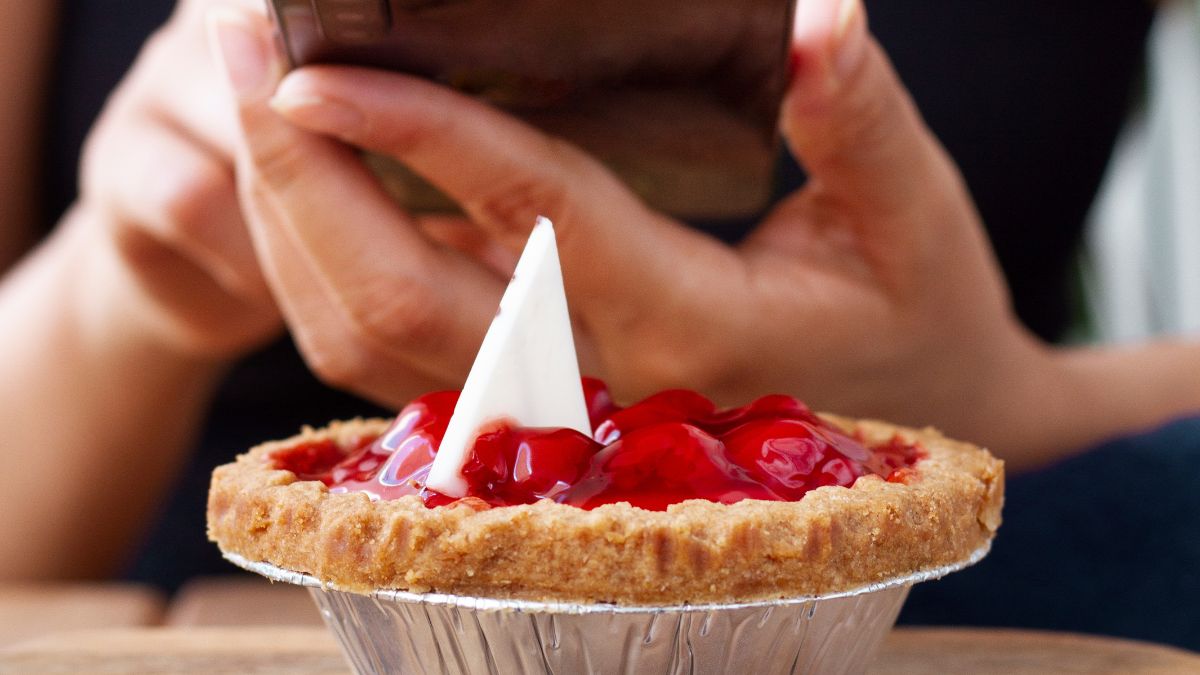
The most common diagnosis bakery owners reach when selling bakery products on Instagram isn’t driving sales is a photography problem. The photos need better lighting. The angles could be more creative. The editing isn’t consistent enough. So they invest in a camera, take a course, hire someone to shoot for a day — and the results are beautiful. The feed looks professional. The products look stunning.
And the sales don’t move.
This is one of the most expensive misdiagnoses in bakery marketing. Not because photography doesn’t matter — it does — but because photography is solving for the wrong variable. The gap between a product that gets admired and a product that gets purchased isn’t a visual quality problem. It’s a strategic framing problem. And those two things require completely different solutions.
Table of contents
- The difference between admiration and desire
- What the visual actually communicates — and what it doesn’t
- The framing gap most bakery product posts have
- Why the caption is doing more work than the photo
- The diagnostic exercise that reveals where your content is losing people
- What changes when product content is built strategically
The difference between admiration and desire
Admiration and desire are two different psychological states — and they produce two different behaviors.
Admiration is what happens when someone sees a beautiful croissant photo and double-taps. It’s a moment of aesthetic appreciation. It feels positive, it registers as engagement, and it means nothing for purchase behavior. The person who admired your croissant at 8am on a Tuesday is not necessarily the person who comes in on Saturday.
Desire is what happens when someone sees that same croissant and feels something shift — a pull toward the specific experience of being there, eating that, right now or soon. Desire creates intention. Admiration creates a like.
Most bakery Instagram content is optimized for admiration. The visual is beautiful, clean, well-composed. It earns engagement from people who appreciate good food photography. But it doesn’t create the specific psychological state that leads someone to leave the app, get in the car, and walk through your door.
The distinction matters because the two states require different inputs. Admiration is triggered by aesthetics. Desire is triggered by specificity — the sensory detail, the context, the reason this product, at this bakery, on this particular day, is worth wanting.
What the visual actually communicates — and what it doesn’t
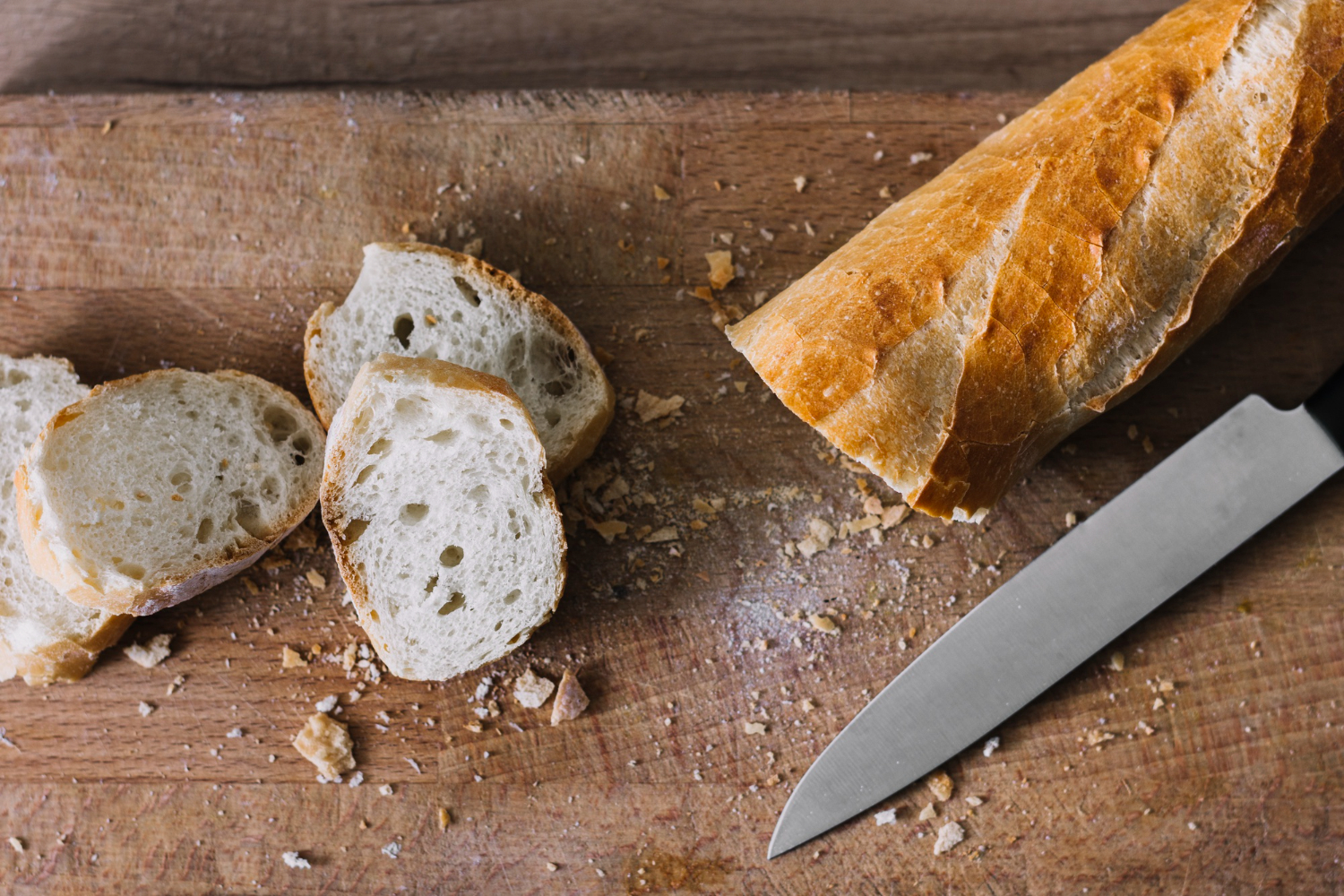
Research published in the Journal of Business Research found that internal detail views of food — close-ups that show texture, layers, and interior composition — attract consumer attention more effectively and generate higher perceived trust and purchase intention than external overall views. A wide shot of a full loaf is less compelling than a close-up of the open crumb structure. The detail communicates something the overview can’t: proof of what’s inside.
This is the first framing problem most bakery product posts have. They show the product as it exists in the world — whole, complete, at a distance — rather than showing the product as the customer would experience it. The moment of cutting, pulling apart, tasting. The interior that justifies the exterior.
A separate body of research in sensory food marketing has shown that higher color saturation in online food images increases purchase intention by boosting perceptions of freshness and tastiness. The visual needs to do sensory work — to make someone almost feel the texture, almost smell the warmth, almost taste the thing they’re looking at. That’s not a filter problem. It’s a compositional and framing decision that requires understanding what the image needs to communicate, not just what it needs to look like.
The framing gap most bakery product posts have
Open your bakery’s Instagram and look at your last ten product posts. For each one, ask a single question: does this image tell me something specific about this product that I couldn’t assume from the category alone?
A photo of a croissant that looks like a croissant tells the viewer: this bakery has croissants. A photo that shows the laminated layers pulled apart, the butter visible in the cross-section, the steam still rising — that tells the viewer something specific about this croissant, at this bakery, made this way.
The difference isn’t production quality. It’s intentionality about what the image is trying to prove.
Across independent bakery profiles, the pattern is consistent: product posts that convert tend to show process, texture, or transformation — something that communicates craft rather than just result. Product posts that generate admiration but not purchase tend to show the finished product in isolation, styled for aesthetic appeal, with nothing that distinguishes it from any other well-made version of the same thing.
The bakery with the most beautiful flat lay of a sourdough loaf is not necessarily the bakery that sells the most sourdough. The bakery whose photo makes someone feel the weight of the crust before they’ve touched it — that’s the one creating desire.
Why the caption is doing more work than the photo
Here’s a counter-intuitive truth about bakery Instagram content: the caption often determines whether a good photo converts, more than the photo itself.
Research on graphic storytelling in food marketing — published in Foods journal — found that combining visual and narrative elements creates stronger narrative transportation than either alone. The image creates an opening. The narrative completes the experience. When a caption does nothing more than name the product and add a few emojis, it leaves the image to do work it can’t do alone.
A caption that creates desire doesn’t describe the product. It places the reader inside an experience. It answers the question the reader is unconsciously asking: why should I want this today, specifically, from you?
That might be the story of why this item exists on the menu this week. It might be a detail about the process that makes it different. It might be the specific context — the kind of morning, the kind of person, the kind of moment — that this product is made for. What it should never be is a description of what the photo already shows.
The photo and the caption should be doing different jobs. The photo creates sensory pull. The caption creates narrative context. When both are working, the result isn’t just content — it’s a case for why someone should come in.
The diagnostic exercise that reveals where your content is losing people
Here’s the exercise that makes the gap visible.
- Pick three of your best-performing product posts — the ones with the most saves or the most reach.
- For each one, answer this question as if you were a potential customer seeing it for the first time: after seeing this post, do I know one specific thing about this product that makes it worth choosing over any other bakery’s version of the same thing?
If the answer is no — if the post is beautiful but undifferentiated — then it’s doing brand awareness work, not conversion work. It’s contributing to how people feel about your bakery in general, without giving them a specific reason to act today.
Most bakery owners who run this exercise discover the same thing: their best-looking content and their most strategically effective content are not the same posts. The ones that convert tend to be messier, more specific, more grounded in a particular detail or moment. The ones that get the most likes tend to be the most generic.
That’s not a coincidence. Aesthetic polish and strategic specificity are different skills — and most bakery content development optimizes for the former while the latter is what drives the purchase.
What changes when product content is built strategically
You’ve put real craft into what you make. The products deserve content that communicates that craft with the same intention — not just visually, but strategically.
The shift from admiration-optimized content to desire-optimized content doesn’t require better equipment or a bigger photography budget. It requires a different set of questions before the shot is taken: what does this image need to prove? What does the caption need to make the viewer feel? What specific reason should someone have to act after seeing this?
Those questions are strategic, not technical. And they’re harder to answer than “does this look good?” — which is exactly why most bakery product content stops at the aesthetic layer and never reaches the conversion layer.
It’s not reasonable to expect bakery owners to simultaneously master the craft of baking, the operations of a business, and the strategic mechanics of visual content that converts. But recognizing where the gap lives — and that it isn’t a photography problem — is the first step toward closing it.
Your products are worth being seen clearly. The question is whether your content is doing that work.
Strategy for Bakeries helps independent bakeries build content strategies that go beyond aesthetics — and start doing real conversion work. If you’d like to understand where your product content is leaving customers behind, send us an email — we’d love to hear about your bakery.